
Pradhama Drishtiya Kuttakkar is a gripping cat-and-mouse game that benefits from smart writing.

For India, the goal is not simply to host another grand diplomatic gathering. It is to prove that a diverse coalition of emerging powers can still deliver.

Xi brought in asymmetrical power play by stating that India should have 'strategic cognition' and 'strategic judgement made on the basis of the stage of development the two countries are at'. This is a very nuanced way of asserting China's coercive diplomatic posture and reflects Beijing's penchant to unleash border instability at will, restrict rare earth metal exports, exert pressure on India at global and regional orders, asserts China expert Srikanth Kondapalli.

'India was the emirate's largest international source market by hotel guest volume.'

Hockey India is embroiled in a significant internal dispute between President Dilip Tirkey and Secretary Bhola Nath Singh, primarily over a controversial jersey colour change and the authority to call emergent meetings. An upcoming Executive Board meeting aims to address these differences, discuss the future of the Hockey India League (HIL) including its restructuring into a joint venture, finalise election dates, and deliberate on hosting Asian Champions Trophy events.

The political confidence required to place high-end Japanese aircraft and personnel on Indian soil is itself a data point.
It indicates a level of trust that would have been difficult to imagine when India-Japan defence ties were largely symbolic, explains Varun Arya.

Chinese President Xi Jinping's upcoming visit to India for the BRICS summit is a pivotal diplomatic event poised to significantly impact bilateral ties and global cooperation amidst ongoing international instability.

The Supreme Court has affirmed its decision not to alter the five-member high-powered committee, led by former Justice R Subhash Reddy, which is investigating allegations of police excesses against student protesters and violence against police personnel in Delhi. The court dismissed concerns about potential bias, stating the committee acts as its "extended hand" and will function under its supervision. It also noted the suspension of an executive magistrate who issued a show-cause notice to a student involved in protests.

Amidst ongoing ethnic tensions, a new political alignment in Manipur sees Meitei and Naga groups uniting to demand an update to the National Register of Citizens with a 1951 base year, a move fiercely opposed by Kuki-Zo communities who fear it will disenfranchise them.

Analysts predict that the Reserve Bank of India's interest rate decision, the evolving situation in West Asia involving the US-Iran conflict, and crude oil prices will be the primary factors influencing investor sentiment in the Indian stock market this week.

From the adorably vain Poo to the free-spirited Geet, Kareena Kapoor Khan has delivered some memorable performances.

Gold and silver prices are anticipated to maintain a positive trajectory in the coming week, with market volatility expected to remain high due to ongoing developments in West Asia and upcoming global economic data, particularly the Federal Reserve's FOMC meeting minutes.

Gold and silver prices are expected to remain range-bound this week as investors await crucial US economic data, including the non-farm payrolls report, and further signals from the Federal Reserve regarding its interest rate policy.

The Securities and Exchange Board of India (Sebi) has introduced a comprehensive new code of conduct for its board members, significantly tightening rules on conflict of interest, disclosures, recusals, and non-permitted investments, moving from broad ethical guidelines to a more prescriptive, compliance-driven regime.

Mumbai-based Raj Thakur tells us how his relationship with his wife, Mamta, blossomed from friendship to marriage and the little secrets that have kept their relationship alive for nearly three decades.
All board members and staff of the Securities and Exchange Board of India (Sebi) will be required to declare their assets, liabilities, trading activities, and relevant relationships at multiple stages - at the time of appointment, annually, upon key events, and at exit. This is part of a series of recommendations by a high-level committee constituted by the markets regulator in a bid to overhaul conflict-of-interest and disclosure rules.
The Securities and Exchange Board of India (Sebi) is reportedly 'close' to approving the National Stock Exchange's (NSE) initial public offering (IPO) draft documents, with an expected market debut by early next month. Sebi Chairman Tuhin Kanta Pandey also emphasised the regulator's focus on enhancing market resilience against evolving risks, including technology failures and the impact of artificial intelligence.

India and China are in what experts call 'a cooperation-versus-competition situation'.

Verify a content creator's Sebi registration, qualifications and certifications before acting on their advice.

A top national shotgun coach, involved in India's Asian Games preparations, is under investigation by the Sports Authority of India for alleged conflict of interest related to a contract for building a shooting range in Chennai.
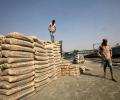
Indian cement manufacturers, despite a stable Q4FY26, are bracing for significant profitability pressures from Q1FY27 onwards due to escalating input costs, primarily driven by the West Asia conflict's impact on coal and petcoke prices.

A spokesperson for the Central Khatam al-Anbiya Headquarters said that Iran's armed forces are prepared to intensify their response if aggression continues.

A new UN Security Council report has 'officially attributed' the November 2025 Red Fort terror attack in New Delhi, which killed about 15 people, to Al-Qaeda in the Indian Subcontinent (AQIS). The report highlights AQIS's evolution into a regional terrorist entity and its efforts to establish networks.

rediffGURU Anu Krishna, mind coach and co-founder of Unfear Changemakers, explains to a 64-year-old male why older women lose interest in sex.

The popularity of US President Donald Trump is waning with approval ratings at its lowest, according to former diplomat Mahesh Sachdev, who notes that with two-thirds of Americans not approving of a continuation of the war on Iran, Trump faces the risk of being impeached.

US Vice President JD Vance and Prime Minister Narendra Modi held a phone call to discuss expanding the India-US comprehensive global strategic partnership, focusing on trade, defence, energy security, emerging technologies, and critical minerals. The discussion comes amidst rising tensions in West Asia and recent regional realignments, with both leaders reaffirming their commitment to strengthening cooperation.

The conflict may disrupt Budget 2026-2027 projections, squeezing revenues and raising subsidies, prompting fiscal adjustments and potential reforms, echoing lessons from the Covid-era shock, points out A K Bhattacharya.

Yash's Toxic continues a fascinating trend in Indian cinema where a single star portrays both father and son, often leading to intense on-screen conflicts.

Pakistan's Prime Minister Shehbaz Sharif has engaged in extensive diplomatic efforts to de-escalate the conflict in West Asia, offering to host talks between the US and Iran and engaging with leaders from Saudi Arabia, Qatar, Malaysia, the UK, China, and the European Union.

Indian listed companies experienced their fastest revenue growth in 15 quarters during Q1FY27, with combined net sales rising 18.4% year-on-year, while net profit grew 16%, primarily driven by mining, metals, and banking sectors, despite a contraction in operating margins due to higher input costs.

US Vice-President J D Vance's unexpected phone call to Prime Minister Narendra Modi on August 8 has ignited speculation about a potential diplomatic overture, possibly seeking India's support amidst the escalating US-Iran conflict and a shifting global power landscape, suggests Ambassador M K Bhadrakumar.

A court in Thane, Maharashtra, acquitted a speech-impaired woman accused of killing her would-be daughter-in-law, citing inconsistencies in the victim's dying declarations and failure of the prosecution to prove the case beyond reasonable doubt.

Karnataka Governor Thaawarchand Gehlot has suspended KPSC Chairman Shivashankarappa S Sahukar following allegations that he facilitated the illegal selection of his two daughters as Industrial Extension Officers. The Governor has also recommended to the President that the matter be referred to the Supreme Court for an inquiry under Article 317(1) of the Constitution.

If an OTT series can make a young person curious about the armed forces, make a family understand the sacrifices made by those in uniform, or simply make someone walk up to a veteran and say, "Thank you for your service," then it has achieved something far more important than merely getting its history right, notes Air Commodore Nitin Sathe (retd).

Prime Minister Narendra Modi addressed concerns about the impact of the West Asia conflict on India, assuring efforts to minimise its effects and prioritising the safety of Indian citizens working in the region. He also criticised the Congress party for making remarks that could endanger Indian lives for political gain.
Uncertainties stemming from the West Asia crisis and its potential impact on inflation and economic growth were key factors in the Reserve Bank of India's Monetary Policy Committee (MPC) decision to maintain the status quo on interest rates, according to the recently released MPC meeting minutes.
HDFC Bank reported an 8.04 per cent increase in its March quarter consolidated net profit to Rs 20,350.76 crore, but highlighted potential near-term risks for small-business borrowers due to the West Asia conflict. The bank's CEO also addressed the recent resignation of its non-executive chairman and hinted at a potential top-level reorganisation.

Pakistan, Saudi Arabia and Turkiye on Friday signed a key joint defence agreement under which an attack against one of them will be treated as an attack against all of them, amid increasing security concerns in the wake of escalating tensions in West Asia.

Chinese foreign ministry spokesperson Mao Ning said that the country believes that dialogue and negotiation are the only viable solutions to resolving disputes and that the continued escalation of the conflict serves no one's interests.

'Healthy double-digit returns are still possible, though a sharp rally is unlikely.'
